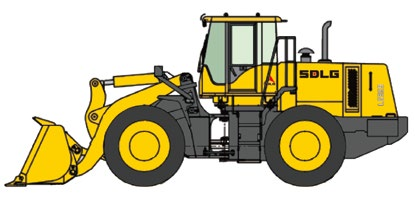
 Wheel Loader
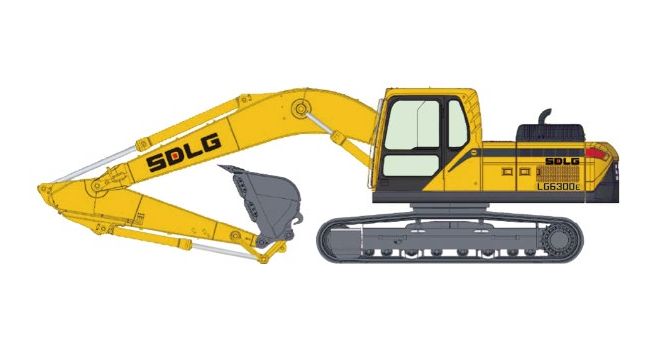 Excavator
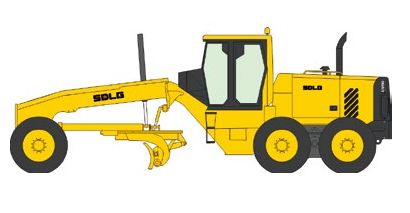 Motor Grader
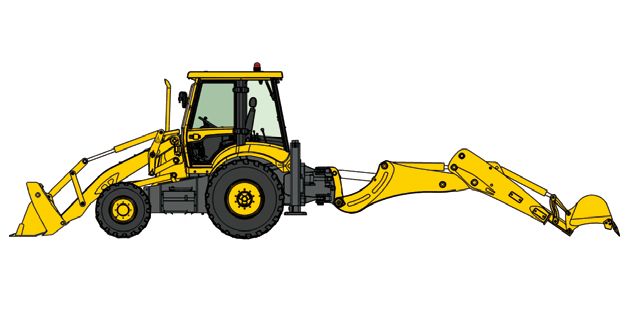 Backhoe Loader
 Road Roller
 Spare Parts
Leave Your Message
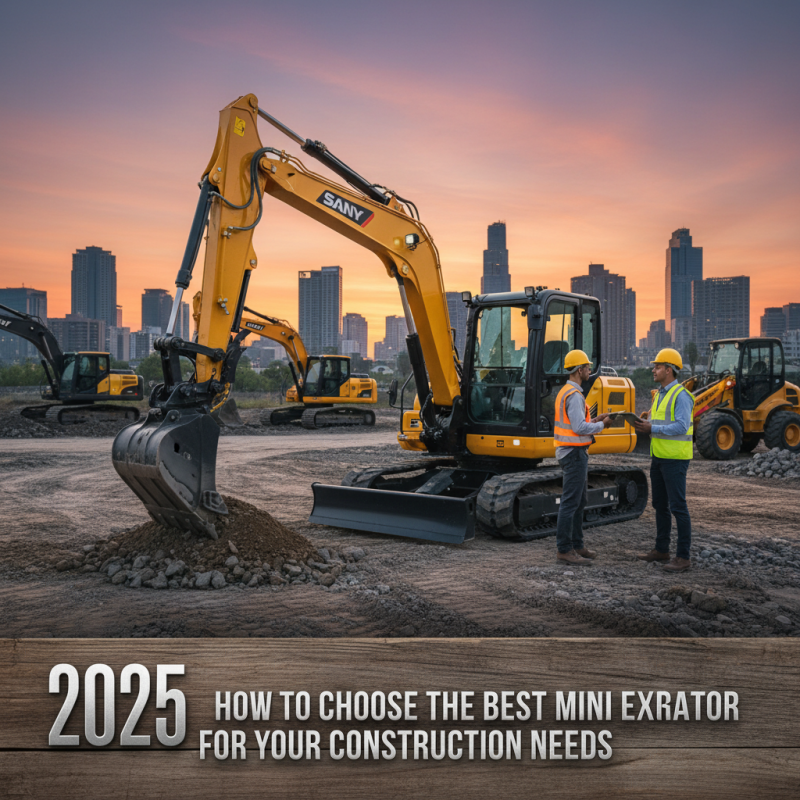
In the fast-paced world of construction, picking the right equipment can really make a difference when it comes to getting things done efficiently. Every project is different—some might need a small, nimble machine, while others call for something more heavy-duty. That’s where Sany Mini Excavators come in—they’ve become a go-to among pros because they’re reliable and packed with the latest tech. As John Smith, a well-known expert and consultant in the excavator scene, puts it, “Choosing the right mini excavator isn’t just about size; it’s about knowing what your project needs and understanding the terrain you’ll be working with.” Sometimes, it’s a bit of trial and error, but getting it right really helps keep things moving smoothly.
When you’re trying to decide which mini excavator is best for your job, think about things like size, power, and what features you really need. The Sany line has a bunch of options that fit different tasks—be it digging, grading, demolition, or landscaping. Their compact design makes them perfect for tight spaces where a big excavator would be awkward or practically impossible to use.
At the end of the day, making the right choice means jobs get done faster and better. By listening to experts like John Smith and checking out what Sany’s mini excavators can do, contractors can make smarter calls that match their project’s unique needs. It’s all about working smarter, not just harder.
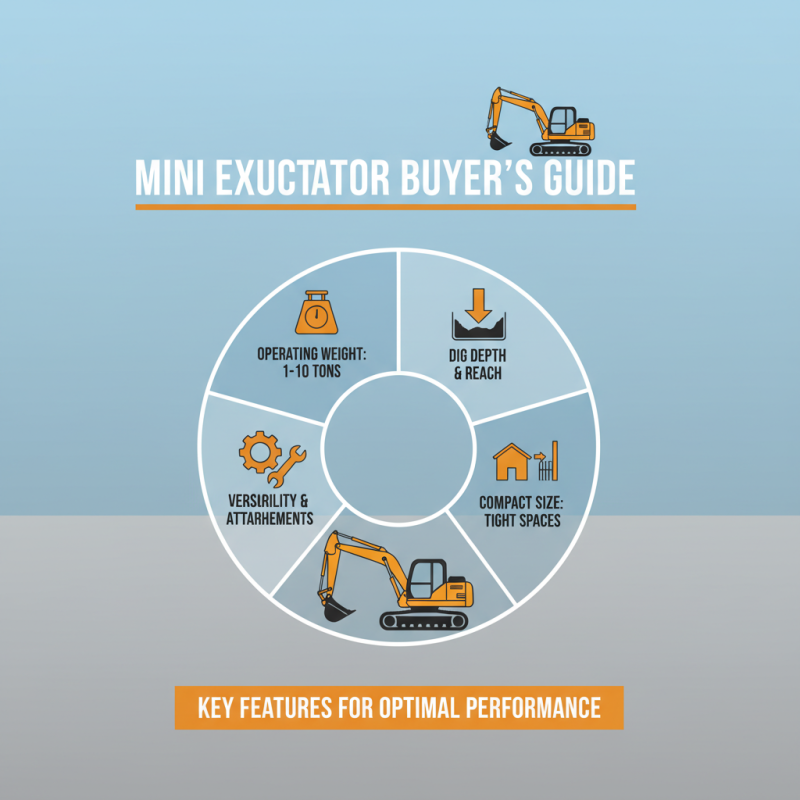
When it comes to choosing a mini excavator for your construction needs, understanding the key features and specifications is essential. Mini excavators come in various sizes and configurations, making them incredibly versatile for different tasks. One of the primary aspects to consider is the machine's operating weight, as this affects stability and performance. Typically, mini excavators weigh between 1 ton and 10 tons, allowing them to navigate tight spaces while still delivering powerful performance. Assessing the depth of dig and reach capabilities is also crucial, as these factors determine how effectively the machine can handle the tasks at hand.
Tips: When evaluating a mini excavator, prioritize the reach and digging depth that best suits your projects. For instance, if you often work in confined areas or need to access hard-to-reach spots, a model with a shorter swing radius would be beneficial. Additionally, consider the hydraulic flow rate, as higher rates can enhance attachment versatility, allowing you to tackle various tasks such as digging, grading, or demolishing efficiently.
Another vital specification is the boom configuration. A traditional boom offers great digging strength, while a zero tail swing option is excellent for jobs in congested areas where space is limited. Moreover, pay attention to the operator comfort features, as an ergonomic seat and ease of controls can boost productivity significantly. Always factor in your specific construction needs to select a mini excavator that will provide the best return on investment and efficiency for your projects.
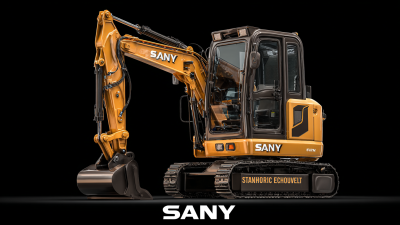
The 12-ton medium-sized compact hydraulic excavator E6125F stands out in the construction equipment sector, providing a blend of power and versatility suited for various working conditions involving loose materials. This hydraulic excavator is built on a mature mid-excavation platform, ensuring its readiness for demanding tasks. The introduction of a load-sensitive hydraulic system significantly enhances operational efficiency, allowing for better fuel economy and reduced emissions, aligning with industry standards that increasingly prioritize sustainability.
With the E6125F, users can expect advanced technological features. The upgraded engine and electronic control system optimize performance while offering users a comfortable operating environment. According to the latest industry reports, compact excavators in this weight class are seeing a surge in demand due to their ability to maneuver in restricted spaces while still delivering substantial output. The E6125F's design capitalizes on this trend, making it an excellent choice for contractors engaged in earthwork, landscaping, and other projects requiring precision and efficiency.
In terms of pricing, the E6125F is competitively positioned at an ex-works price, making it an attractive option for businesses looking to enhance their fleet without overspending. This focus on cost-efficiency combined with high-performance attributes establishes the E6125F as a leading choice for those seeking to maximize productivity across various loose material working conditions. Industry analyses predict ongoing growth in the compact excavator market, making now an opportune time to invest in equipment like the E6125F that meets both economic and operational needs.
: Size is crucial as smaller models are more suitable for tight spaces and urban environments, allowing for easy transport and navigation without sacrificing operational efficiency.
Weight affects transport ease and ground surface impact. Lighter excavators are easier to move and cause less damage, while sufficient weight is necessary for stability during digging or lifting.
Engine performance, including horsepower and efficiency, is key. Higher horsepower is beneficial for robust tasks, while lighter engines may suffice for smaller jobs to optimize fuel consumption.
Fuel efficiency impacts operational costs and environmental concerns. Modern excavators often improve fuel efficiency by up to 30% compared to older models.
Hydraulic systems enhance performance by ensuring optimal hydraulic flow, allowing the machine to deliver the required power precisely when needed, improving output and fuel efficiency.
Attachments such as buckets, hydraulic thumbs, augers, grapple claws, and tilt buckets can transform a mini excavator into a versatile tool for various tasks like digging, grading, and demolition.
Evaluate the specific needs of your projects and select attachments that complement your mini excavator’s capabilities, ensuring they match its weight and power for optimal performance.
Specialized attachments can significantly enhance productivity by allowing the machine to perform diverse functions effectively, streamlining workflow on construction sites.
By understanding size, weight, engine performance, and selecting appropriate attachments, you can create a tailored and efficient operation that meets your specific project demands.
When selecting the best mini excavator for your construction needs, understanding the key features and specifications is crucial. Evaluating factors such as size, weight, and engine performance will help determine which model best suits your project requirements. Power and efficiency are vital, as they directly impact the machine's productivity and operational costs.
Additionally, hydraulic systems play a significant role in the performance of mini excavators, directly influencing their versatility and effectiveness in various tasks. Choosing the right attachments is essential for maximizing the machine's applications. It's also important to budget for not just the initial purchase of equipment like the Sany Mini Excavator, but also ongoing maintenance costs. Finally, conducting thorough research on different brands and models, alongside consideration of reliability and user reviews, will ensure you make an informed decision that meets your construction demands.